
Looking for earrings you can put on without spending ten minutes deciding whether they match your outfit? Stud earrings are a pretty good place to start.
They're simple, don't hang down, and work with almost any look. Still, choosing the right pair can bring up a few questions. How big should they be? Which metals are comfortable? And what should you know before spending money on diamond studs?
Let's look at what you need to know before choosing your next pair.
So, What Are Stud Earrings?
Stud earrings are small earrings that sit close to your earlobe. Unlike hoops or drop earrings, they don't hang down or swing when you move.
They come in plenty of styles, from diamond and pearl studs to colorful gemstones and simple gold or silver shapes. Whether you like something subtle or a little more noticeable, there's a pair for you.
Most studs have three basic parts:
The front: The part people see, such as a diamond, pearl, or gemstone.
The post: The small piece that goes through your ear piercing.
The back: The piece that keeps the earring in place.
That's all there is to it. But when buying a pair, don't focus on looks alone. Check the metal, make sure the earrings feel comfortable, and choose backs that hold them securely.
Studs are also easy to pair with other jewelry, whether it's a necklace, bracelet, or your favorite ring. The key is to choose pieces that suit your style without overthinking it.
What Keeps Stud Earrings in Place?
The back of your earrings might seem like a small detail, but it makes a difference. A loose back can make an earring easier to lose, while one that's too tight can feel uncomfortable.
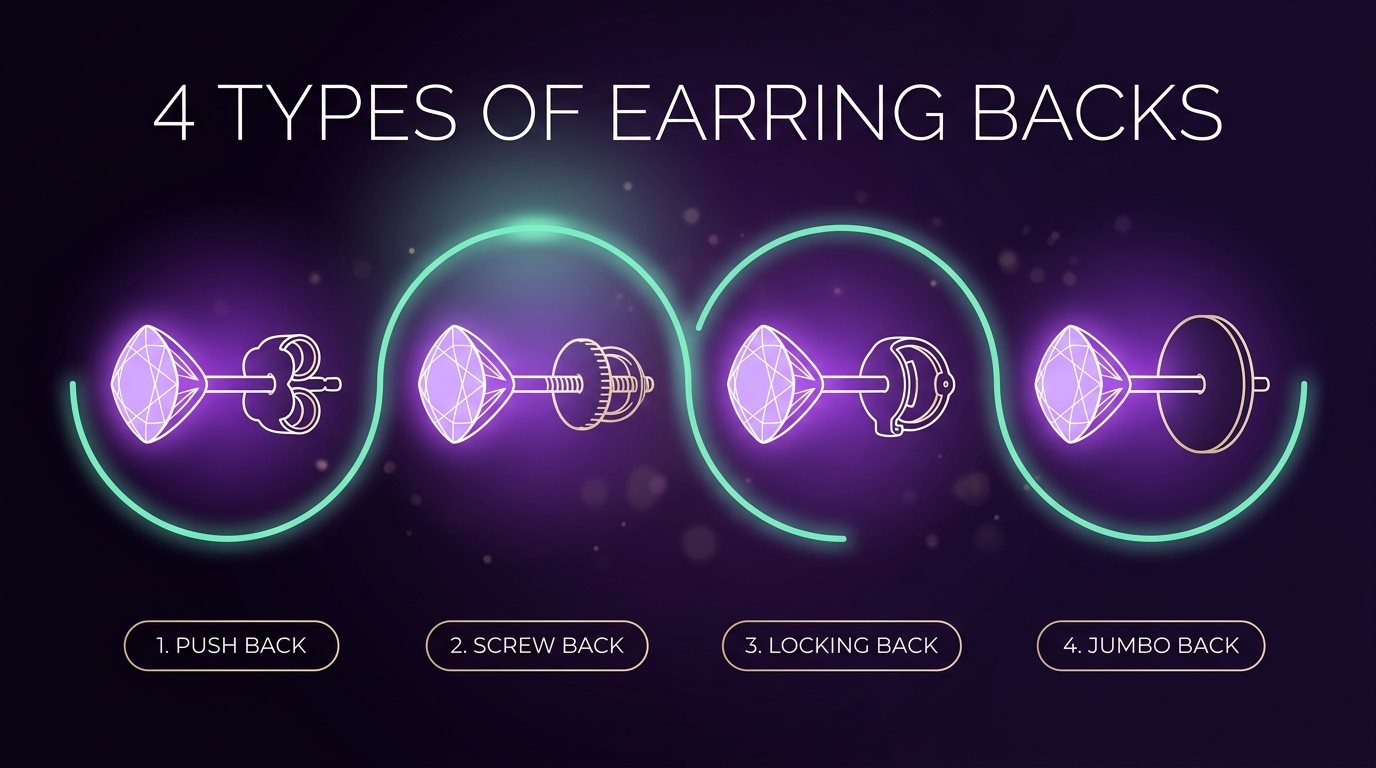
Here are the main types you'll find:
Push backs: These slide onto the post and are easy to put on and take off. They're common on everyday studs, but check them regularly because they can loosen over time.
Screw backs: These twist onto the post and provide a secure fit when fastened properly. They take a little longer to put on, though.
Locking backs: These use a locking mechanism to hold the earring in place. They're designed for extra security, but the fit and quality still matter.
Jumbo backs: These are larger than standard backs and provide more support behind the earlobe. They can help heavier studs sit straighter instead of tilting forward.
So, which one should you choose? It depends on the size and weight of your earrings, how often you wear them, and what feels comfortable. If you're buying expensive diamond studs, it's worth paying attention to the backing rather than choosing based on appearance alone.
When shopping for jewelry, you can compare different options to suit your style and budget, from replica diamond stud earrings to replica engagement rings. Whatever you choose, check the materials, construction, and overall quality before buying.
What Types of Stud Earrings Can You Choose From?
Stud earrings come in so many styles that finding a pair you like is usually the easy part. The trick is choosing one that fits your style, budget, and how you plan to wear it.
Diamond studs
If you want something classic, diamond studs are a great choice. Round diamonds are especially popular, but oval, cushion, and other shapes offer a slightly different look. You can choose natural or lab-grown diamonds depending on your budget.
Gemstone studs
Love a little color? Gemstone studs are worth a look. Sapphires, emeralds, rubies, and birthstones add a pop of color without making your earrings feel too bold.
Pearl studs
Pearl studs have that simple, timeless look that works for almost any occasion. Wear them with a formal outfit or keep things casual with your everyday clothes.
Gold and silver studs
Sometimes simple is the best choice. Small gold or silver balls, hearts, stars, and other shapes are easy to style and go with just about anything. They're also a good option if you want everyday earrings without spending too much.
Lab-grown diamond and diamond-look studs
If you like the sparkle of diamonds but want to explore different price points, you have options. Lab-grown diamonds are real diamonds created in a laboratory, while cubic zirconia and other diamond-look stones are different materials made to resemble diamonds. They can look similar, but their properties, durability, and prices differ.
Before buying, check the product details so you know exactly what you're getting and can choose a pair that suits your needs.
Choosing the Right Metal for Your Ears Is More Important Than You Think
Have you ever worn earrings that made your ears itchy, red, or uncomfortable? The metal might be the reason. Nickel, which is found in some jewelry, is a common cause of skin allergies.
So, if your ears are sensitive, don't choose earrings based on looks alone. Pay attention to what they're made of, too.
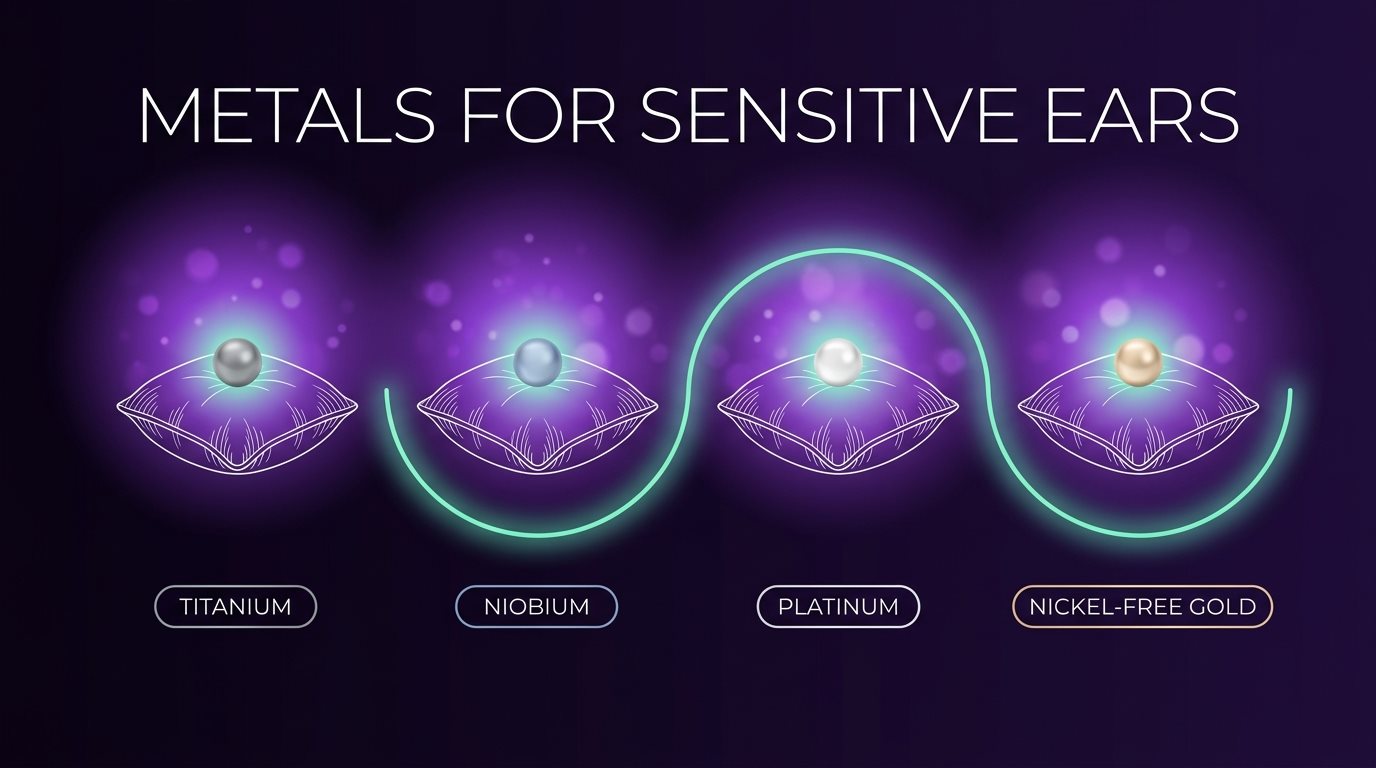
Here are a few options worth considering:
Titanium: A good option for sensitive ears, especially when the material is clearly labeled.
Platinum: Durable and generally well tolerated, but usually more expensive.
14k or 18k gold: Can be a good choice, but check whether the gold alloy contains nickel.
Niobium: Another option to consider if your ears react to certain metals.
Sterling silver: Works well for many people, although some may react to the other metals mixed into it.
One important thing to remember: just because earrings are labeled hypoallergenic doesn't mean they're completely nickel-free. If you know you have a metal allergy, check the product details before buying.
And if your ears become itchy, red, or swollen after wearing earrings, take them off. If the symptoms don't improve, speak with a healthcare professional.
A beautiful pair of earrings isn't worth the discomfort. Choose a metal that feels good on your ears, so you can wear your favorite studs without worrying about irritation.
When Should You Wear Stud Earrings?
Stud earrings are so easy to wear that you might forget you're even wearing them. But you don't always need to keep them in, especially when you're sleeping or showering.
Before bed: It's usually better to take your studs off before sleeping. The posts and backs can press against your ears, especially if you sleep on your side, and leave them feeling sore or uncomfortable.
Before showering: You can shower with some earrings on, but soap, shampoo, and other products can build up around the stones and settings. Taking your studs off makes cleaning them easier and helps keep them in good condition.
During exercise: If your earrings might catch on clothing or equipment, take them off before you start. Just remember to put them somewhere safe so you don't lose them.
If you have a new piercing: This is the one time you shouldn't rush to remove your earrings. Keep your starter jewelry in until the piercing has healed, and follow your piercer's aftercare instructions. Taking it out too soon can cause the hole to close or lead to complications.
For everyday wear, there's no need to overthink it. Wear your favorite studs when they're comfortable, take them off when needed, and clean them regularly.
One important thing: If your ears become sore or irritated, don't ignore it. Your earrings should feel comfortable, not cause you problems.
How Do You Keep Stud Earrings From Falling Out?
Losing one earring is frustrating, especially when it's part of an expensive pair. The backing plays an important role in keeping your studs secure.
Push backs are convenient, but they can loosen with use. Screw backs and locking backs may provide extra security when fitted and fastened correctly.
Before wearing your earrings, check that the backs fit snugly without pressing painfully against your ears. If a back feels loose, replace it rather than taking the risk.
For diamond studs, it's also worth checking the settings occasionally to make sure the stones are secure. If a stone moves or a setting looks damaged, have a jeweler inspect it before wearing the earrings again.
Are Expensive Stud Earrings Always Worth It?
They aren’t always worth it. You can find stud earrings for under $20, while diamond and gold designs can cost hundreds or even thousands of dollars. So, how much should you actually spend?
It depends on what you're looking for. Here's a rough idea of what different types of stud earrings might cost:
- Basic fashion studs: $5 to $30
- Sterling silver studs: $20 to $100
- Solid gold studs: $50 to $300 or more
- Natural diamond studs: $100 to $1,000 or more
- Lab-grown diamond studs: $125 to $800 or more
These are general price ranges, not fixed prices. The actual cost depends on the materials, stone quality, size, brand, and design. For example, a small pair of diamond studs will usually cost less than a larger pair with higher-quality stones.
But price isn't the only thing to think about. Your comfort and ear health matter just as much. If you have sensitive ears, look for suitable metals and avoid anything that causes irritation. It's also worth checking the weight and backing, especially if you plan to wear your studs every day.
Before buying, compare a few pairs within your budget. Check what they're made of, how securely they fasten, and whether the price matches their quality.
What Should You Check Before Buying Stud Earrings?
Found a pair of studs you love? Before you buy them, take a moment to check a few important details. They can help you choose a pair that looks beautiful without spending more than you need to.
Check the cut: A well-cut diamond reflects light beautifully, giving it more brightness and sparkle.
Compare both diamonds: The two stones should look similar in size, shape, and color so they look balanced when you wear them.
Check the total carat weight: Make sure you know whether the listed carat weight is for both earrings together or for each diamond individually.
Look at the metal and setting: Choose a metal that suits your ears and make sure the diamonds are held securely in place.
Check the return policy: Buying online can make it harder to judge the earrings in person, so understand the return conditions before ordering.
Ask for grading reports: If you're spending a significant amount, ask what diamond documentation is available and verify the report details where applicable.
The Gemological Institute of America (GIA) recommends considering the four Cs (cut, color, clarity, and carat weight) when comparing diamonds. You don't necessarily need the highest grade in every category. Focus on finding diamonds that look good to you, have reliable documentation, and fit your budget.
Final Word
Choosing stud earrings comes down to finding a style you love, a metal that suits your ears, and a pair that fits your budget. Whether you prefer simple everyday studs or something with a little more sparkle, comfort and quality matter just as much as appearance.
And if you enjoy exploring jewelry styles before buying, why stop at earrings? With our Ring Try On tool, you can upload a photo of your hand and see how different ring designs look on you. From delicate bands to bold engagement rings, you can compare styles and find what suits you best.
FAQs
1. What makes stud earrings different from other earrings?
Stud earrings sit close to your earlobe without hanging down. Hoops form a loop, while drop earrings hang below your ear and move as you walk.
2. What does total carat weight mean for diamond studs?
Total carat weight (CTW) is the combined weight of both diamonds. For example, a pair with 1 carat total weight usually has two 0.50-carat diamonds.
3. What is a good size for diamond stud earrings?
A 1-carat-total pair is a popular choice if you want noticeable sparkle without going too large. Each round diamond is roughly 5 mm wide, although the exact size depends on its cut and proportions. Smaller studs are great for everyday wear, too.
4. Which earring backs are best for keeping studs secure?
Push backs are easy to use, while screw backs and locking backs can offer extra security when fitted correctly. Choose a backing that holds your earrings comfortably without pressing too tightly against your ears.
5. What are the best stud earrings for sensitive ears?
Titanium, niobium, platinum, and verified nickel-free gold are worth considering. If certain earrings leave your ears itchy or red, check their metal composition and avoid materials that trigger a reaction.
Find Your Perfect Ring in Seconds
Stop guessing and start seeing. Our AI-powered virtual ring checker analyzes your preferences to reveal the perfect diamond for you. It's fast, fun, and finds your fit.
Try Our AI Checker Now