When you start looking for an engagement ring, the diamond usually catches your eye first. Maybe it's the shape, the sparkle, or the way it looks in the photos. But the setting deserves just as much of your attention.
The setting affects how the diamond looks, how securely it sits, and how the ring feels when you wear it every day. Some styles are simple and classic, while others add extra sparkle or a little more detail.
With so many options available, choosing one can feel confusing. Let's look at the different engagement ring settings, what makes each one special, and how to find a style you'll love wearing.
First, Understand What Makes Up a Ring Setting
When you look at engagement rings, you might notice that the same diamond can look quite different depending on how it's set. That's because the setting does more than hold the stone in place. It helps shape the ring's overall look and affects how well the diamond is protected during everyday wear.
The band is the part that goes around your finger, while the top holds the main diamond. The metal around the stone keeps it secure, and its design determines how much of the diamond you can see.
For example, a prong setting holds the diamond with small metal tips, keeping more of the stone visible. A bezel setting surrounds the diamond with a metal rim, giving it a clean look and extra protection.
It's also important to know that the setting and ring style aren't the same thing. A solitaire ring has one main diamond, which can be held in place with prongs or a bezel. Understanding these differences makes it easier to compare engagement rings, including replica engagement rings, and choose a design that suits your everyday life.
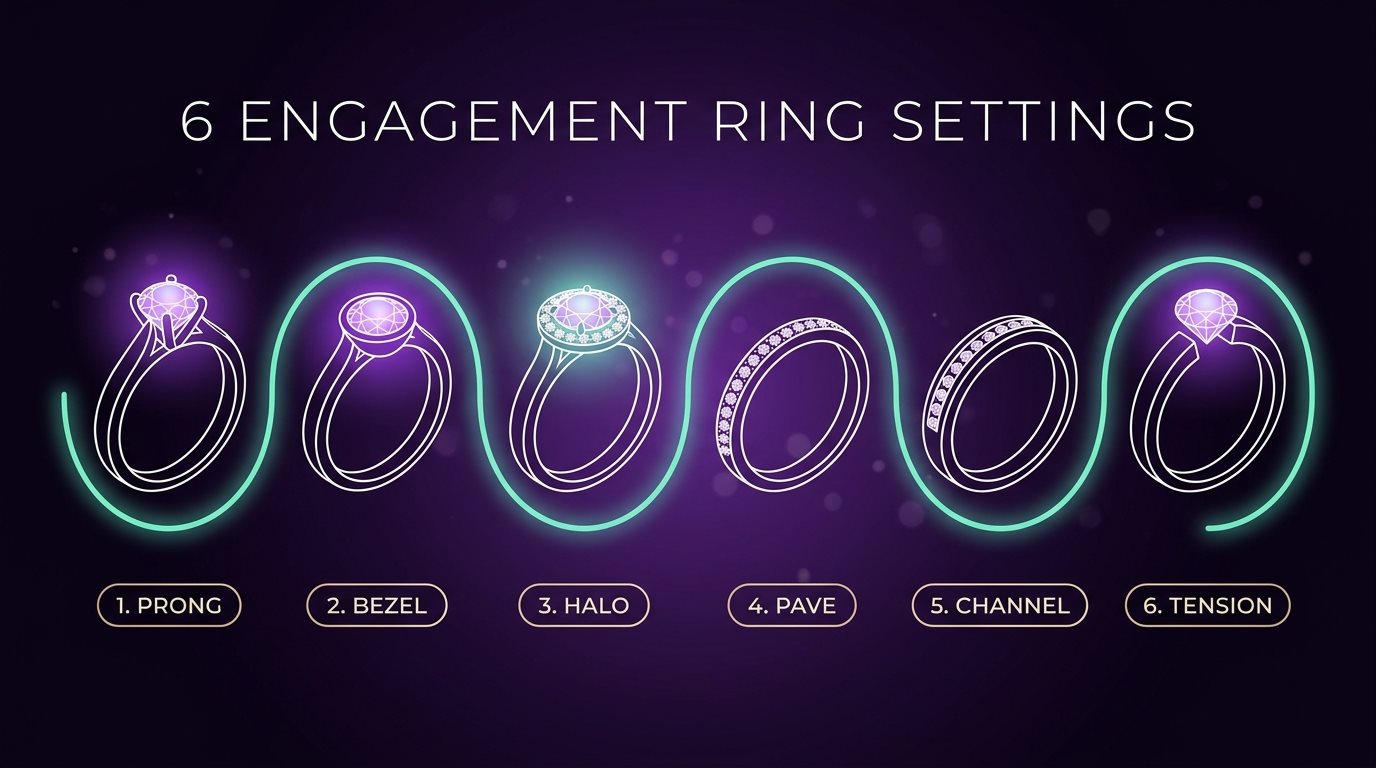
Six Settings That Give Engagement Rings Different Looks
The right setting depends on what you want the ring to look like and how you plan to wear it. These options offer a useful starting point:
Prong: Let the Diamond Stand Out
A prong setting holds the diamond with small metal tips, usually four or six. Because much of the stone remains exposed, you can see more of the diamond from different angles.
This setting is a popular choice for classic engagement rings. It keeps the design relatively simple and allows the center diamond to take the attention.
There are a few things to keep in mind, though. Raised prongs can catch on clothing, and they need occasional checks to make sure the stone remains secure.
Bezel: Keep the Edges Protected
A bezel setting surrounds the diamond's edge with a rim of metal. The rim can go all the way around the stone or cover only part of its edge.
The result is a smooth, clean design that often feels more modern than a traditional prong setting. Since the metal covers the diamond's edges, it can also help protect them from everyday bumps.
Bezel settings are worth considering if you use your hands a lot or prefer a ring with fewer raised details. However, the metal covers more of the stone, so the diamond may look different from one in an open setting.
Halo: Add More Sparkle Around the Center Stone
A halo setting places smaller gemstones around the main diamond. These stones create a frame that adds sparkle and can make the center diamond appear larger.
You can choose a single halo for a neat outline or a more detailed design with additional rows of stones. Halo rings can also combine different diamond shapes or colored gemstones.
The extra detail comes with a little more maintenance. Small stones need to be checked regularly, and dirt can collect around the setting if the ring isn't cleaned properly.
Pavé: Bring Sparkle to the Band
In a pavé setting, small diamonds sit closely together along the band, held by tiny metal beads or prongs. This creates the look of a band covered in diamonds.
Pavé works well with a simple center stone because the band adds detail without taking all the attention away from it. It can also be combined with a halo or other ring styles.
Since pavé uses many small stones, it's important to have them checked occasionally. Resizing can also be more complicated when diamonds run along the band.
Channel: Keep Accent Stones Neat and Secure
A channel setting places a row of gemstones between two strips of metal. The stones sit inside the channel rather than being held by separate prongs.
This creates a smooth, structured appearance and helps protect the sides of the accent stones. You'll often see channel settings along ring bands or in designs with several smaller diamonds.
One thing to consider is resizing. If the channel extends around much of the band, changing the ring size may be difficult.
Tension: Create a Floating-Diamond Look
A tension setting holds a diamond between the ends of a carefully engineered metal band. This creates the appearance of a stone floating in the ring, with very little visible metal around it.
The design feels modern and distinctive, especially if you prefer clean lines over traditional decorative details.
However, tension settings require precise construction and can be difficult to resize or repair. Ask the jeweler about servicing and maintenance before choosing one.
The Ring Style Is a Separate Choice
Once you understand how the diamond is held, you can explore the overall style of your engagement ring. This is where you decide whether you want one main stone, several gemstones, or extra detail along the band.
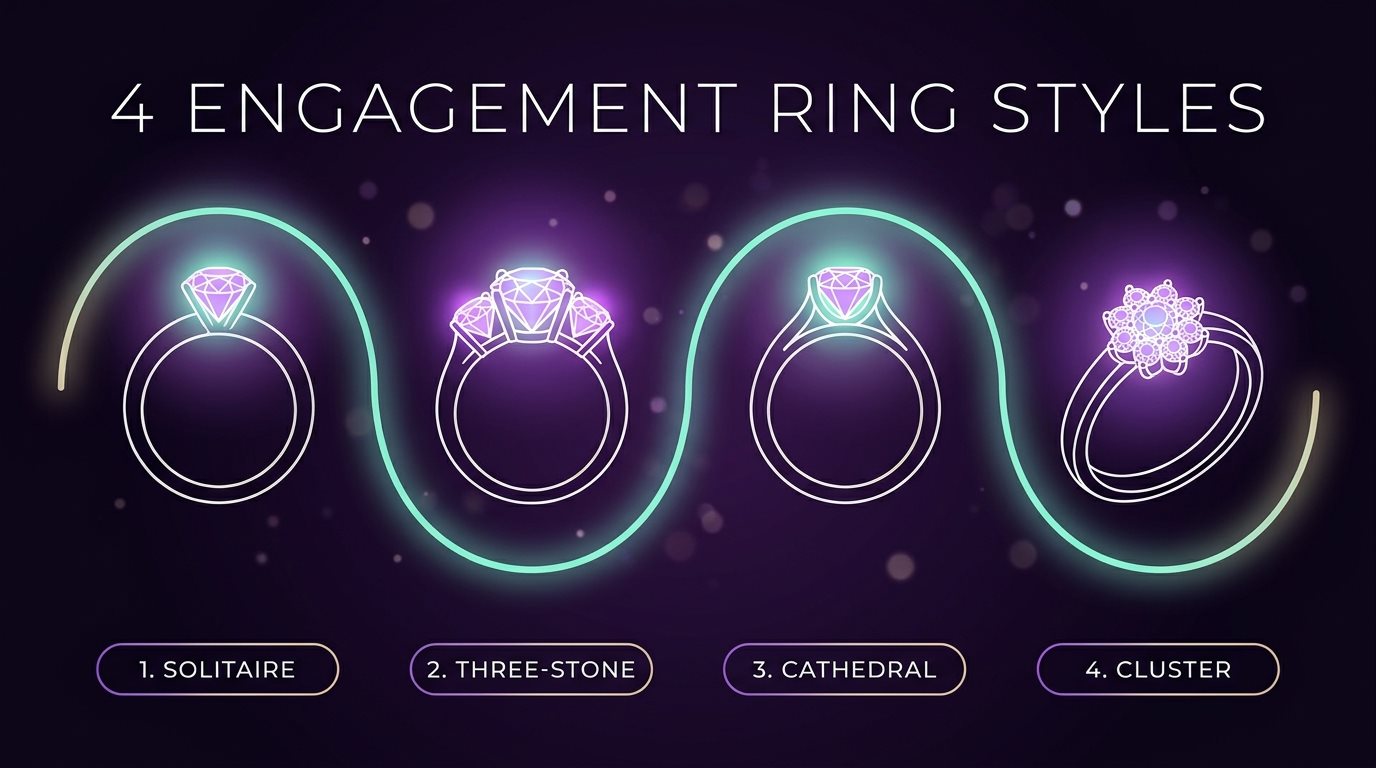
Solitaire Rings Keep Things Simple
A solitaire ring features one main gemstone without a surrounding halo or a row of accent stones. Its simple design keeps attention on the center diamond.
It's also easy to pair with different wedding bands, making it a practical option if you want flexibility when choosing your wedding jewelry.
Three-Stone Rings Add More Detail
A three-stone ring has a center diamond with a gemstone on either side. The side stones may match the center stone or introduce a different shape or color.
This style creates a fuller appearance than a solitaire and gives you more room to personalize the design.
Cathedral Rings Raise the Center Stone
Cathedral settings have curved or sloping metal supports that rise from the band toward the center stone. These arches lift the center stone higher and can add detail when viewed from the side.
The higher profile may not suit everyone, especially if you prefer a ring that sits close to your finger. Check the height before choosing one for everyday wear.
Cluster Rings Group Smaller Stones Together
Instead of relying on one large center diamond, a cluster ring groups several smaller gemstones into a single design. The stones may form a flower, a geometric pattern, or another decorative shape.
Cluster rings offer plenty of variety and can create a bold appearance without using one large center stone. For more examples of how these styles differ, see GIA's guide to buying a diamond engagement ring.
How Your Diamond Shape Affects Engagement Ring Settings
Your diamond's shape can make a big difference in how your engagement ring looks. The right setting brings out the stone's beauty, complements its shape, and helps keep it secure.
For example, round diamonds look beautiful in classic prong settings, while oval and emerald-cut diamonds can work well with either prong or bezel settings. Pear and princess-cut diamonds may need extra protection around their corners to help prevent damage.
When comparing engagement ring settings, think about how each design suits your diamond, how securely it holds the stone, and how comfortable it feels for everyday wear. The goal is to find a setting that looks beautiful and works for your lifestyle.
The Ring Details a Photo Never Shows You
A ring can look perfect on your screen and still be annoying to live with. A photo can’t show you how it feels at the end of a long day, or what happens when you pull on a sweater.
Think before you buy, especially with a lab-grown diamond ring, since the diamond is only part of the story.
Here are a few things to check first:
Height. How far does the diamond sit above the band? A high-set stone looks dramatic, but it can catch on sweaters, hair, and gloves. If you’re active or use your hands a lot, a lower setting may suit you better.
Comfort. Can you picture wearing this band all day, every day? A band that looks great in a photo can feel too wide, too thin, or a bit tight once it’s on your finger.
Cleaning. Rings with lots of small accent stones have more places for dirt and lotion to hide. Ask how to clean it at home and how often it needs a professional look.
Resizing. Fingers change over time, so ask whether the ring can be resized later. Some designs are harder to resize than others, like bands set with stones all the way around.
Stone security. Find out how the diamond is held in place and how often the setting should be checked. Even a well-made ring needs an occasional inspection to keep the stones tight.
Return policy. If you’re buying online, read the return, exchange, and warranty terms before you order, not after the ring arrives.
It only takes a few minutes to check these things, and they can save you from a ring that looks great in photos but gets left in the jewelry box.
How Much Should You Spend on the Setting?
There isn't one price that applies to every engagement ring setting. The total cost depends on the metal, craftsmanship, center diamond, and any additional gemstones.
A simple setting may cost less than an elaborate design with a halo or pavé band, but the exact difference depends on the materials and construction. A more detailed setting isn't automatically a better choice.
Start with the total amount you want to spend on the ring. Then compare complete designs and check what each price includes. If you prefer a larger center diamond, a simpler setting may help you balance your budget.
If the band details matter more to you, you might prefer a smaller center stone with a more decorative design. The aim is to choose a ring that fits your budget without compromising on the details that matter most to you.
Final Thoughts
The right engagement ring setting should complement your diamond, match your style, and feel comfortable for everyday wear. From classic prong settings to protective bezels and sparkling halos, each design offers something different.
Before choosing, try different styles with our Virtual Ring Try-On tool. Upload a photo of your hand, explore different designs, and see which engagement ring setting suits you best.
FAQs
What is the most common engagement ring setting?
Prong settings are a popular choice because they leave much of the center diamond visible. Solitaire, halo, and pavé designs are also widely used, each offering a different overall look.
Which engagement ring setting is best for everyday wear?
A bezel setting can be a practical option because it surrounds the diamond's edge and has a smooth profile. The best choice still depends on the ring's construction, your routine, and how comfortable it feels.
Does a halo setting make a diamond look bigger?
A halo can make the center diamond look bigger. The small diamonds around it create a wider outline, making the ring appear more noticeable.
Can an engagement ring setting be changed?
Often, a jeweler can move your diamond into a new setting, but the process depends on the stone, the new design, and the condition of the existing ring. Ask about the cost and any risks before proceeding.
Are engagement ring settings sold separately?
Some jewelers sell settings on their own, so you can choose your diamond separately. Just make sure the setting fits your diamond's shape and measurements.
Find Your Perfect Ring in Seconds
Stop guessing and start seeing. Our AI-powered virtual ring checker analyzes your preferences to reveal the perfect diamond for you. It's fast, fun, and finds your fit.
Try Our AI Checker Now