
A diamond's grading report reveals quite a lot that your eyes can't. A diamond may look beautiful in a jewelry store or photograph, but its appearance alone won't tell you its exact color grade, clarity grade, or other details that help explain its quality.
That's why you'll often see the words “GIA certified diamond” when shopping for diamonds. GIA examines and grades diamonds, then issues reports documenting their characteristics. Learning to read one can help you understand the stone beyond its sparkle and the price on its tag.
So, what information does a GIA report actually contain? How can you check that it matches your diamond, and which details should you pay attention to?
Let's get to it!
What Is a GIA Certified Diamond?
When shopping for diamonds, you may come across the term GIA-certified diamond in product listings, jewelry stores, or online discussions. It generally refers to a diamond that has been examined and graded by the Gemological Institute of America (GIA).
GIA is an independent organization known for its work in gemstone research, education, and grading. After examining an eligible diamond, it issues a report describing the stone's characteristics, including its color, clarity, carat weight, and cut grade where applicable.
So, what does that mean when you're shopping for a diamond? The report gives you more information about the stone than its appearance or the seller's description alone. You can use those details to compare diamonds, understand differences in quality, and see why two stones with similar appearances might have different prices.
There's one small detail worth knowing. Although “GIA certified diamond” is the term you'll commonly see in jewelry listings, GIA technically issues grading reports rather than certificates. These reports describe a diamond's characteristics, but they don't determine its monetary value or guarantee its future resale price.
What Does a GIA Diamond Report Include?
When you're shopping for a diamond, its appearance is only one part of the decision. You also want to know about its cut, color, clarity, carat weight, and other details that can affect its overall look and value. This is where a GIA diamond report becomes useful.
For natural diamonds in the standard D-to-Z color range, the report covers the 4Cs, along with additional details such as measurements, polish, symmetry, and fluorescence. These details help you compare stones and get a clearer idea of what you're buying, especially when choosing a loose diamond for an engagement ring.
If you're also considering lab-grown diamonds, it's worth knowing that GIA uses a separate assessment system for eligible lab-grown stones. The information provided can differ from a traditional natural diamond grading report.
Let's look at what these details mean and how they can help you make a more informed choice.
Source: GIA
Cut and How Much the Diamond Sparkles
Cut plays a big part in how much a diamond sparkles. It affects how light enters the stone, reflects inside it, and returns to your eyes. A well-cut diamond usually looks brighter, while a poorly cut one may appear dull even if its color and clarity grades are high.
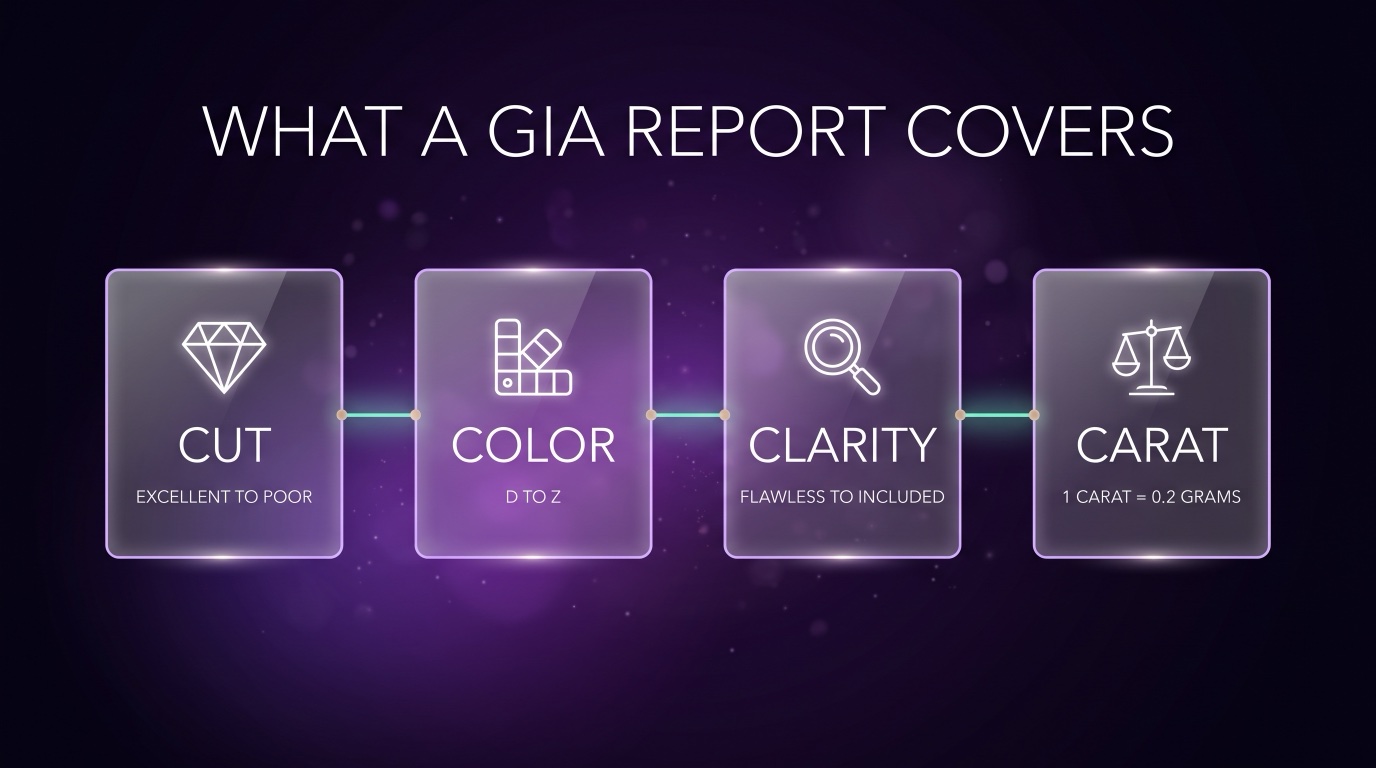
GIA grades the cut of standard round brilliant natural diamonds from Excellent to Poor. Fancy shapes, such as oval, pear, and emerald, don't receive the same overall cut grade, so you'll need to pay closer attention to their proportions and appearance.
Color and How White the Diamond Looks
A diamond's color grade tells you how much noticeable color it has. GIA's natural diamond color scale runs from D to Z, with D representing colorless and lower grades showing increasing yellow or brown tones.
You may not notice much difference between two neighboring grades without comparing the diamonds side by side. The metal you choose also affects the overall appearance. Yellow gold can work well with slightly warmer diamonds, while white gold and platinum create a cooler look.
Clarity and Small Imperfections
Most diamonds have tiny natural characteristics called inclusions or blemishes. Some are inside the stone, while others appear on its surface. Clarity grading considers their size, number, position, and visibility under magnification.
GIA's traditional clarity scale ranges from Flawless to Included. However, a lower clarity grade doesn't always mean you'll notice imperfections when looking at the diamond. Some stones have small inclusions that are difficult to see without magnification.
Carat Weight and Diamond Size
Carat refers to a diamond's weight, not its physical size. One carat equals 0.2 grams, but two diamonds with the same weight can look different depending on their shape and proportions.
For example, an oval diamond may appear larger from above than a round diamond of the same carat weight. That's why it's worth checking the measurements on the GIA report, particularly when buying a loose diamond.
Which Types of GIA Diamond Reports Are Available?
When you hear that a diamond comes with a GIA report, it's worth checking which report the seller means. GIA offers different report options, and each one provides a different level of detail. Some include a full clarity diagram, while others provide the grading results in a shorter or digital format.
For eligible loose natural diamonds in the D-to-Z color range, the available options include the following.
Diamond Grading Report: This is the full report. It includes the 4Cs, measurements, other grading details, and a plotted clarity diagram showing the diamond's internal and external characteristics.
Diamond Origin Report: Along with the diamond's grading information, this report identifies the country where the natural diamond was mined, provided it qualifies for the service.
Diamond Dossier: This option provides the diamond's grading results in a more compact format. It includes the 4Cs but doesn't contain a plotted clarity diagram.
Diamond eReport: This is a digital version of the grading information for eligible diamonds, along with a face-up image of the stone.
Diamond Focus Report: This provides digital grading information for select smaller natural diamonds.
Not every diamond qualifies for every report. The available option depends on factors such as the diamond's size, characteristics, and GIA's service requirements.
So, when a seller says a diamond is GIA certified, ask to see its actual report. Check which type it is and what information it includes. This helps you understand exactly what GIA has assessed before making a purchase.
Is GIA the Only Trusted Name in Diamond Grading?
GIA is one of the best-known names in diamond grading, but it's not the only reliable gemological laboratory. Organizations such as IGI and GCAL also assess diamonds and provide grading reports.
A diamond's report helps you understand its characteristics, including cut, color, clarity, and carat weight. However, the information and grading methods can vary between laboratories. This is why two reports for similar diamonds may not always show exactly the same grades.
The type of diamond also matters. Natural diamonds, lab-grown diamonds, and colored diamonds may have different assessment requirements.
When buying a diamond, look beyond the laboratory's name. Check what the report covers, whether the diamond has been properly identified, and whether its details match the stone you're purchasing. If you're comparing loose lab-grown diamonds or natural diamonds, reviewing their reports side by side can help you make a more informed decision.
How Can You Check a GIA Report Before Buying?
Before making a purchase of your favorite piece, take a moment to check its GIA report. This is particularly important when shopping online, where you can't examine the stone in person.
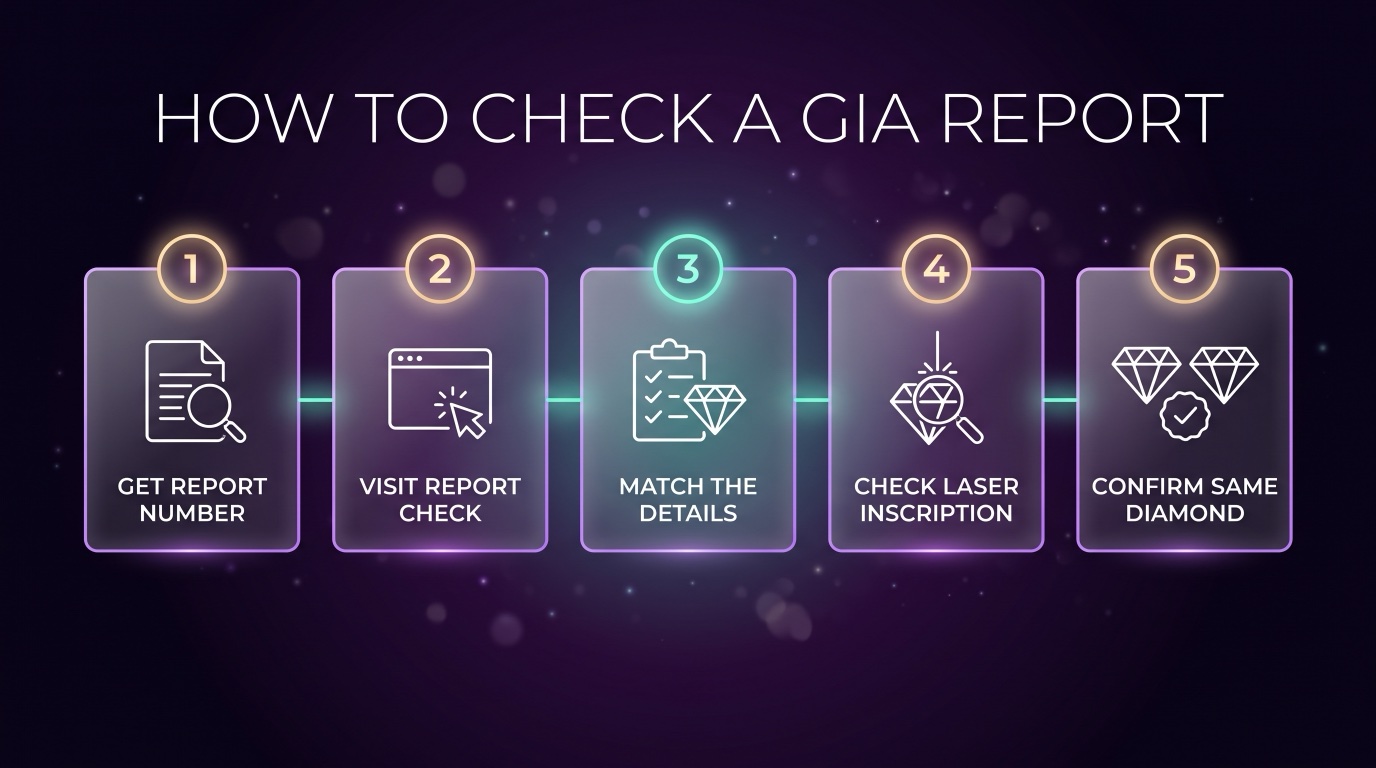
The process is fairly simple:
Get the report number. Ask the seller for the GIA report number linked to the diamond you're interested in.
Visit GIA Report Check. Enter the number on GIA Report Check to find the report in GIA's database.
Match the diamond details. Compare the report with the seller's listing. Pay attention to the shape, carat weight, color, clarity, and measurements. These details should match.
Check the laser inscription. If the diamond has a GIA laser inscription on its girdle, ask the jeweler to check whether the number matches the report.
Confirm it's the same diamond. A genuine report number doesn't automatically prove that the report belongs to the stone being sold. Ask the seller to confirm that the actual diamond matches the document, especially if it's already mounted in a ring.
GIA Report Check makes it easier to verify report details, but don't stop at the number alone. Always check that the information matches the diamond you're buying. You can also read GIA's tips for buying a diamond online.
Is a GIA Certified Diamond Worth the Price?
A GIA report gives you useful information about a diamond before you buy it. You can check its cut, color, clarity, and carat weight, then compare those details with other diamonds you're considering. This makes it easier to understand what you're paying for.
However, a GIA report doesn't tell you whether the seller's asking price is fair. Two diamonds with similar grades can have different prices, and even diamonds with different grades may look quite similar to the naked eye.
For example, you might compare two diamonds with the same carat weight. One has a higher clarity grade, while the other has a few inclusions that aren't easily visible without magnification. The difference in price may come down to how much that higher clarity grade matters to you.
Color, cut, shape, and overall appearance also affect how a diamond looks and what it costs. So, take time to compare the actual stones, check their reports, and see how their prices differ.
It's important to know that a GIA report isn't an appraisal. It provides grading information but doesn't establish the diamond's market value or guarantee its resale price. If you need a valuation for insurance, you'll need a separate appraisal from a qualified jewelry appraiser.
Final Word
All in all, choosing a GIA certified diamond becomes easier when you understand what its report tells you. It gives you useful details about the stone, helps you compare your options, and gives you a better idea of what you're paying for.
If you're buying an engagement ring, you'll also want to think about how the diamond will look on your hand. Once you've found a stone you like, use our virtual ring try-on tool to preview different ring styles and see which one suits your taste. Take your time, compare your options, and choose a diamond you're happy with. A preview shows how a ring looks, but it can't tell you its comfort, weight, or exact size, so get properly sized by a jeweler before you buy.
FAQs
Does GIA certify diamonds?
GIA does not technically certify diamonds. It grades them and issues reports detailing their characteristics, including cut, color, clarity, and carat weight. These reports help buyers understand a diamond's quality before purchasing it.
How can I check a GIA diamond report?
Visit GIA Report Check and enter the report number. Compare the online details with the diamond's report and, where possible, its laser inscription to make sure the information matches.
Does a GIA report guarantee a diamond's value?
A GIA report explains a diamond's characteristics but does not determine its price or resale value. The market price also depends on factors such as demand, the seller, and the diamond's overall appearance.
Do lab-grown diamonds have GIA reports?
GIA offers assessment services for lab-grown diamonds, although their reports differ from those for natural diamonds. Under its updated service, qualifying colorless to near-colorless lab-grown diamonds receive a “Premium” or “Standard” assessment.
Is a higher GIA grade always better?
A higher grade means the diamond scored better in a specific category, but it may not always justify the higher price. Compare how the diamonds look, their grading details, and their prices to decide which offers the best value for your budget.
Find Your Perfect Ring in Seconds
Stop guessing and start seeing. Our AI-powered virtual ring checker analyzes your preferences to reveal the perfect diamond for you. It's fast, fun, and finds your fit.
Try Our AI Checker Now