A bracelet might seem like a small addition to your jewelry collection, but the right one can quickly become the piece you never want to take off.
If you've been thinking about getting one, lab-grown diamonds are worth exploring. They're real diamonds, created in a laboratory, and usually more affordable than natural diamonds.
Still, finding the right bracelet takes more than picking the prettiest design. You need to consider the diamonds, the metal, how it fits your wrist, and what you're comfortable spending. Let's go through the details that can help you choose the right one.
What to Know Before Buying a Lab-Grown Diamond Tennis Bracelet
A lab-grown diamond tennis bracelet is a bracelet made with a row of lab-grown diamonds set closely together around the wrist. Each diamond is held in place by a small metal setting, and flexible links connect the sections so the bracelet can move naturally with your wrist. The diamonds create the continuous line of sparkle that gives a tennis bracelet its classic look.
But what exactly are lab-grown diamonds? They are real diamonds created in a laboratory rather than formed naturally underground. They have essentially the same chemical composition, crystal structure, and optical properties as natural diamonds.
These bracelets come in different styles, with variations in diamond size, shape, metal, and setting. Smaller diamonds create a more delicate look, while larger stones are more noticeable. The metal and settings also affect how securely the diamonds are held and how the bracelet wears over time.
What Price Range Should You Expect?
As a rough guide, lab-grown diamond tennis bracelets can range from hundreds to several thousand dollars, depending on their total carat weight, diamond quality, metal, and craftsmanship. The list below gives you an estimated starting point, but actual prices vary by retailer and design.
- 2 to 3 carats: about $800 to $1,800
- 3 to 5 carats: about $1,400 to $3,000
- 5 to 7 carats: about $2,000 to $4,500
- 7 to 10 carats: about $4,000 to $7,500 or more
These are broad estimates, not fixed market prices. They mainly reflect gold bracelets with lab-grown diamonds, and premium designs can cost more.
When comparing bracelets, check the total carat weight, diamond grades, metal, and clasp rather than looking at the price alone. Two bracelets with the same carat weight can still differ in quality and construction.
If you're working with a set budget, focus on the overall look you want and the quality of the finished bracelet. A well-made design with smaller diamonds may be a better choice for you than a larger bracelet with a weaker setting or a clasp that doesn't feel secure.
How to Choose the Best Diamonds for Your Tennis Bracelet
With a tennis bracelet, you're not looking at just one diamond. You're looking at a whole row of them sitting side by side. That's why you want the diamonds to look balanced, with a similar sparkle, color, and size throughout the bracelet.
So, what should you check? Start with the diamond's cut, color, and clarity. Along with carat weight, these are known as the 4Cs of diamond quality.
Here's what each factor means when you're choosing a tennis bracelet:
Cut: Cut affects how well a diamond reflects light. If you want that bright, lively sparkle, pay attention to cut rather than choosing a bracelet based on carat weight alone.
Color: Look for diamonds with a consistent color so the bracelet looks even from one end to the other. The metal matters here, too, as white gold, yellow gold, and other metals can change the overall look.
Clarity: Clarity refers to the tiny internal features or surface marks a diamond may have. With the smaller diamonds often used in tennis bracelets, some inclusions may be difficult to notice without magnification, so you don't always need the highest clarity grade.
Consistency: Take a look at the bracelet as a whole. The diamonds should look reasonably similar in size, color, and sparkle, without any stones standing out for the wrong reasons.
You don't have to choose the highest grade in every category to get a beautiful bracelet. What matters is how the diamonds look together and whether their quality feels worth the price.
Which Bracelet Setting Offers the Look You Want?
The setting affects how your diamonds look and how well they're protected. Since a tennis bracelet contains many stones, it's worth choosing a design that suits both your style and your daily routine. Here are three common settings you'll come across when shopping:
Prong setting
Small metal prongs hold each diamond in place, leaving more of the stone exposed to light. This gives the bracelet a classic, sparkly look. Just keep in mind that exposed diamond edges and prongs can catch on clothing or get knocked, so check that the settings are secure.
Bezel setting
A thin metal rim wraps around each diamond, giving the bracelet a neat, modern look. Because the metal covers the diamond's edges, it can offer extra protection against everyday knocks.
Channel setting
The diamonds sit side by side between two strips of metal, creating a smooth, streamlined finish. With fewer exposed edges, this style can be a good option if you prefer a clean look without prominent prongs.
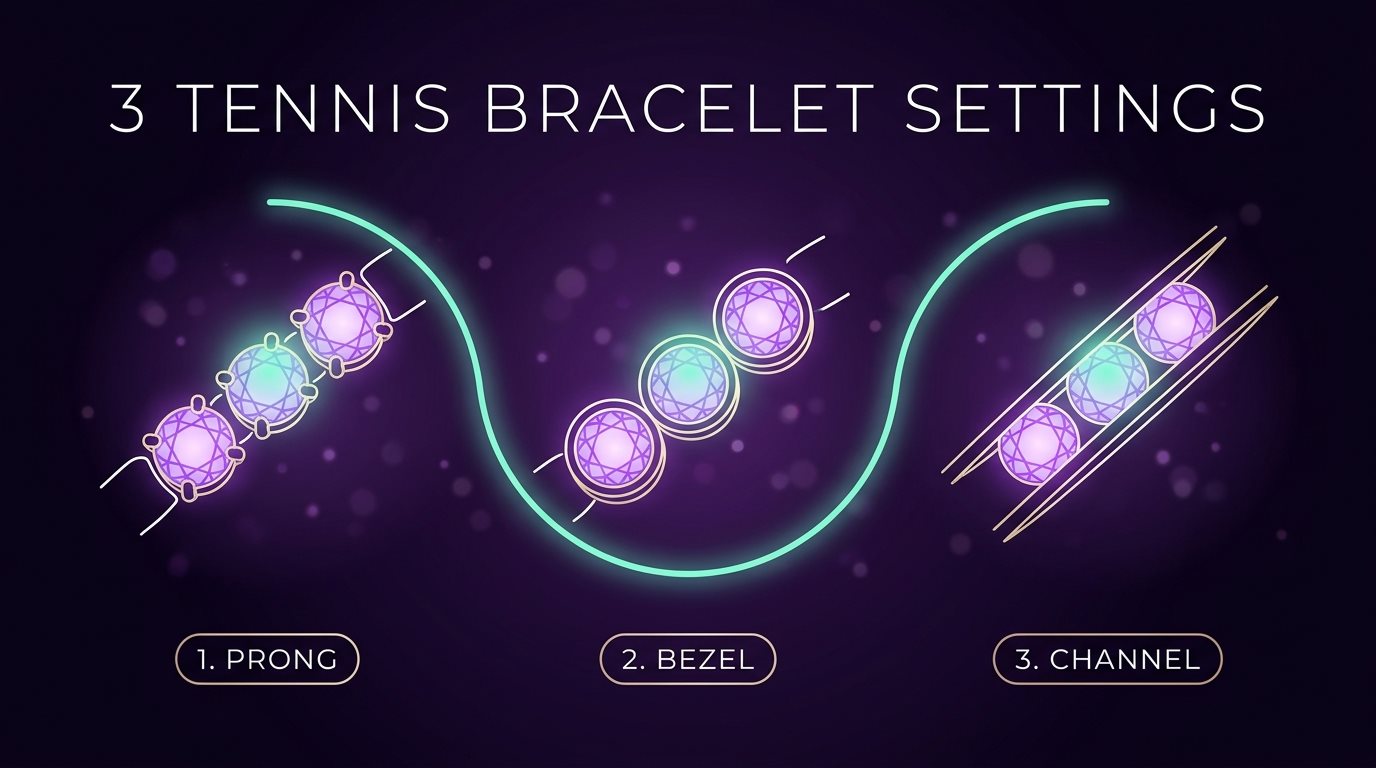
So, which one should you choose? It comes down to the look you like and how you plan to wear your bracelet. Prong settings show off more of the diamonds, while bezel and channel settings offer more metal coverage. None is completely damage-proof, though, so the quality of the construction still matters.
Before buying, check how smoothly the bracelet bends around your wrist and whether the links move comfortably. The settings should look well finished, and the clasp should feel secure. These small details can make a real difference when you wear the bracelet regularly.
How to Get the Right Fit for Your Wrist
A tennis bracelet should sit comfortably on your wrist without feeling tight or slipping around too much. Getting the length right is easier than you might think.
Here's how to find your size:
Measure your wrist. Wrap a soft measuring tape around your wrist, just below the wrist bone. If you don't have one, use a strip of paper and measure it with a ruler.
Check the bracelet length. Compare your measurement with the seller's size guide. If you prefer a looser fit, look for a little extra room.
Make sure it feels right. The bracelet should move naturally when you bend your wrist without pinching your skin or sliding around constantly.
Check the clasp. It should close securely so the bracelet stays in place as you move.
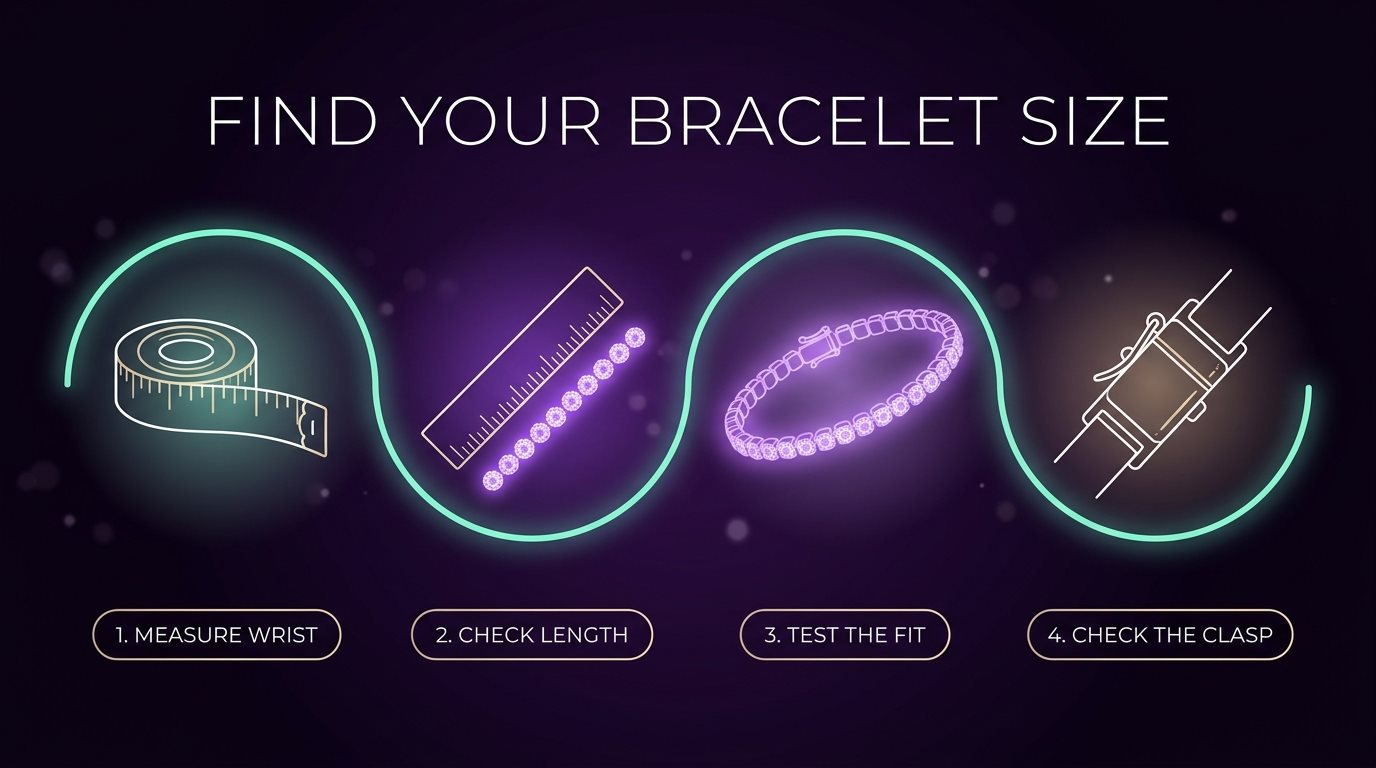
If you're buying online, check the available lengths and whether resizing is an option before placing your order. A little attention to fit can make your bracelet much more comfortable to wear every day.
How to Care for Your Bracelet So It Lasts
A tennis bracelet can stay beautiful for years, but it needs a little care, especially if you wear it often. Lotion, soap, and everyday dirt can collect around the diamonds, dulling their sparkle. Fortunately, a few simple habits can help keep your bracelet clean and protect it from damage.
Clean it gently. Check the manufacturer's care instructions first. If home cleaning is suitable, soak the bracelet briefly in lukewarm water with a little mild soap, then gently brush around the diamonds with a soft toothbrush. Rinse carefully and pat dry with a lint-free cloth. Avoid harsh cleaners and rough scrubbing.
Take it off when needed. Remove your bracelet before exercising, cleaning, gardening, or doing anything that could knock it against a hard surface or snag it on clothing.
Store it safely. Keep it in a separate soft pouch or a lined jewelry box. This helps prevent scratches, tangling, and damage from other jewelry.
Check the clasp and settings. Before wearing it, make sure the clasp closes securely and look for loose stones, bent prongs, or damaged links. If anything seems wrong, don't wear the bracelet until a jeweler has checked it.
Arrange occasional inspections. If you wear your bracelet regularly, have a jeweler check the settings, links, and clasp from time to time. They can spot wear before it leads to a lost diamond or a broken bracelet.
One important thing to remember: diamonds are hard, but they can still chip if struck, and their settings can loosen. Gentle cleaning, careful storage, and regular checks will help you enjoy your bracelet without unnecessary wear and tear.
Final Thoughts
A lab-grown diamond tennis bracelet is a lovely way to add a little sparkle to your everyday style. The key is finding one that looks good, feels comfortable, and fits your budget.
Before you buy, take a moment to compare the diamond quality, metal, and overall design. Then explore different lab-grown diamond tennis bracelets and find the one that feels right for you. After all, the best piece is the one you'll love wearing again and again.
And if you're also choosing a ring to wear with it, you can preview different ring styles on your own hand with our Virtual Ring Try-On tool before you decide.
FAQs
Are lab-grown diamonds real diamonds?
Yes, lab-grown diamonds have essentially the same chemical, physical, and optical properties as natural diamonds. The main difference is how they're made: in a laboratory rather than underground.
Do lab-grown diamond tennis bracelets sparkle like natural diamond bracelets?
They can have the same beautiful sparkle. What matters most is the diamonds' cut and quality, which affect how well they reflect light.
What total carat weight should you choose?
That depends on how noticeable you want the bracelet to be. Compare the individual diamond sizes and the bracelet's width as well as its total carat weight, since these details affect how it looks on your wrist.
Can you wear a diamond tennis bracelet every day?
You can wear a well-made bracelet regularly, provided you care for it properly. Remove it during activities that could damage the stones, links, or clasp, and check its condition from time to time.
Do lab-grown diamond tennis bracelets hold their value?
Their resale value can be lower than their original retail price, and future resale prices aren't guaranteed. If resale matters to you, ask the seller about its buyback or trade-in policy before purchasing.
Find Your Perfect Ring in Seconds
Stop guessing and start seeing. Our AI-powered virtual ring checker analyzes your preferences to reveal the perfect diamond for you. It's fast, fun, and finds your fit.
Try Our AI Checker Now