Looking for a diamond that fits your budget without limiting your design choices? Loose lab-grown diamonds are worth considering.
Instead of buying a ring with a diamond already set in it, you can choose the stone first and find a setting you love later. You can compare different shapes, carat weights, and quality grades to find a diamond that suits your style and budget.
But choosing the right one isn't just about finding the biggest stone for the lowest price. Cut, color, clarity, and overall quality all play a part in what you're getting for your money.
So, what should you look for, and how do you know which stone is worth buying?
Let’s break it down!
What Are Loose Lab-Grown Diamonds?
If you're shopping for a diamond, you've probably come across terms like natural, lab-grown, and loose. They might sound complicated at first, but the differences are actually pretty simple.
A loose lab-grown diamond is a real diamond created in a laboratory that hasn't been set into a piece of jewelry yet. To understand what makes it different, let's break the term down.
What Does “Loose” Mean?
A loose diamond is simply a diamond that hasn't been set into a ring, necklace, or another piece of jewelry. It's already cut and polished, so you can examine the stone before deciding how you want to use it.
For example, you could choose a loose diamond first and then have it set in an engagement ring, pendant, or pair of earrings. This gives you more freedom to choose both the diamond and the design you love.
What Does “Lab-Grown” Mean?
Natural diamonds form deep underground over billions of years. Lab-grown diamonds are grown in a lab in a matter of weeks, using one of two methods (HPHT or CVD), and both produce real diamonds. Our honest guide to lab-grown diamonds explains how they're made and how they compare with natural stones.
Are Loose Lab-Grown Diamonds Real Diamonds?
Yes, they have essentially the same chemical makeup and physical properties as natural diamonds, and they're different from look-alikes such as cubic zirconia and moissanite. Just check the product description and grading report before purchasing so you know exactly what you're getting.
Why Buy a Loose Diamond?
You can buy a ring that's ready to wear, so why choose a loose diamond instead? The main reason is flexibility. When you buy the diamond separately, you get to choose the stone first and decide how you want the finished jewelry to look.
With a finished ring, the center diamond, setting, and overall design have already been selected. That's convenient if you find a ring you love, but you may have fewer options to customize it.
Buying a loose diamond gives you more control over each part of the process:
1. Choose the Diamond You Actually Want
Instead of choosing from the diamonds already set in available rings, you can compare individual stones and focus on the qualities that matter to you.
You might prefer a larger diamond, a particular shape, or a higher clarity grade. Buying loose lets you compare these features before committing to a design.
2. Pick a Setting That Matches Your Style
Once you've chosen your diamond, you can decide how to set it. For example, a 1-carat oval lab-grown diamond could go into a simple solitaire setting, a halo design, or a ring with smaller side stones.
The same diamond can create a very different look depending on the setting. You can also explore different metal colors and band styles to find a combination you like.
If you're unsure which design to choose, a ring try on tool can help you preview different styles on your hand before making a decision.
3. Compare Diamonds More Easily
When you shop for loose diamonds, you can compare stones side by side instead of judging an entire ring at once.
Look at carat weight, cut, color, and clarity to understand how the diamonds differ. You may find that a slightly smaller stone with a better cut suits your preferences more than a larger one.
Just remember that carat weight measures a diamond's weight. The stone's shape and measurements decide how large it actually appears.
4. Create Something More Personal
Buying a loose diamond gives you the chance to build a piece of jewelry around your own preferences. You aren't limited to the settings or combinations a retailer has already put together.
This can be especially useful when designing an engagement ring. You can choose a diamond you love, select a setting that complements it, and create a final design that feels personal to you.
5. Does Buying a Loose Diamond Save Money?
Buying loose doesn't automatically save money. Lab-grown diamonds can cost less than comparable natural diamonds, but a loose stone plus a setting isn't always cheaper than a finished ring.
Your total cost may include the diamond, setting, craftsmanship, and any additional services. A finished ring may also be offered at a competitive price.
To compare your options fairly, look at the total cost of the loose diamond plus its setting and compare it with a similar finished ring.
Ultimately, buying loose makes the most sense when you want more control over the diamond and the final design. If you find a finished ring you love at a good price, that can be a perfectly practical choice too.
So, Are Loose Lab-Grown Diamonds a Good Investment?
It depends on why you're buying. For a ring or another piece of jewelry, a loose lab-grown diamond gives you a real diamond at a lower upfront price. As something to resell later, it's a weaker bet.
De Beers Group's June 2026 Diamond Report says wholesale prices for lab-grown diamonds have fallen 93% since 2020, to an average of about $100 per carat, and it expects retail prices to keep falling.
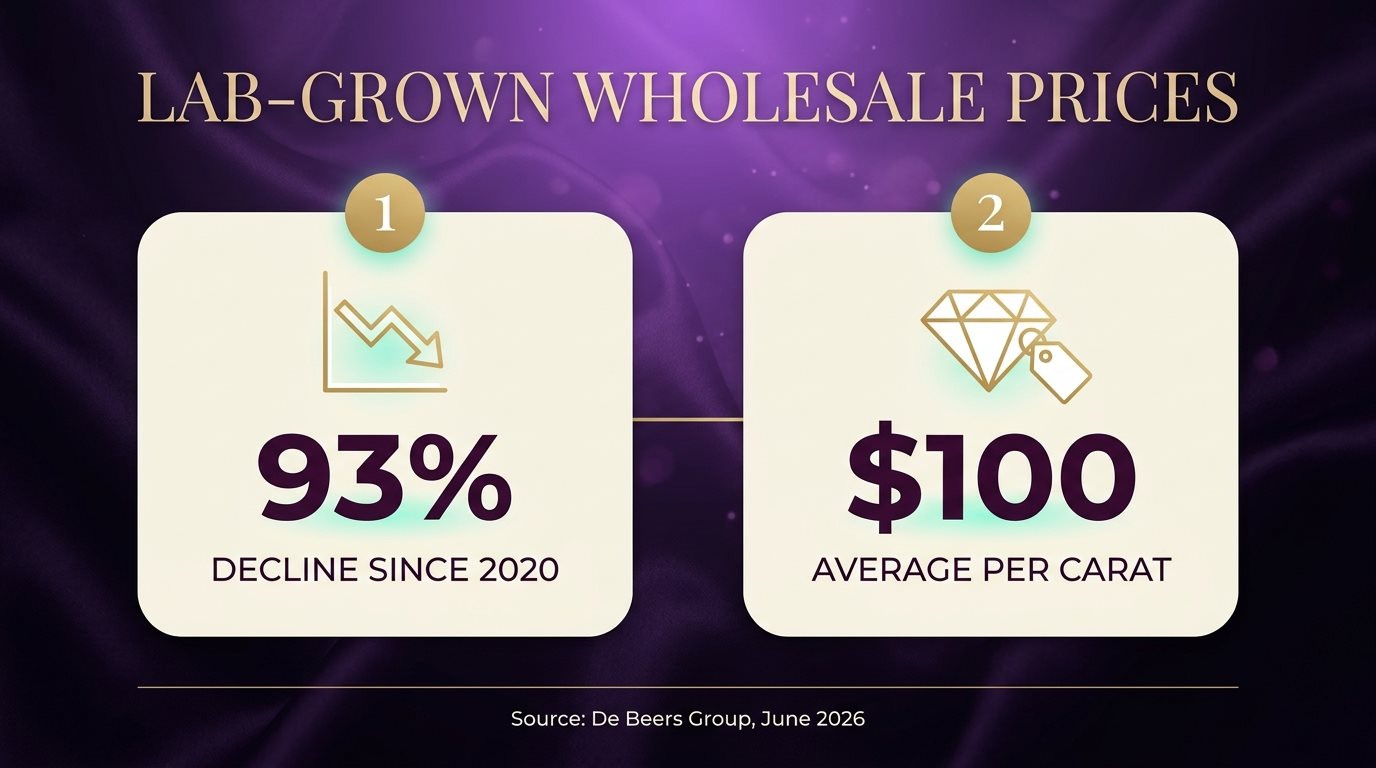
Source: De Beers Group
That makes it hard to get your money back if you sell. Our lab-grown diamond guide covers resale value and price trends in detail. In short, buy a loose lab-grown diamond because you like it, plan to wear it, and can comfortably afford it, not because you expect it to make you money later.
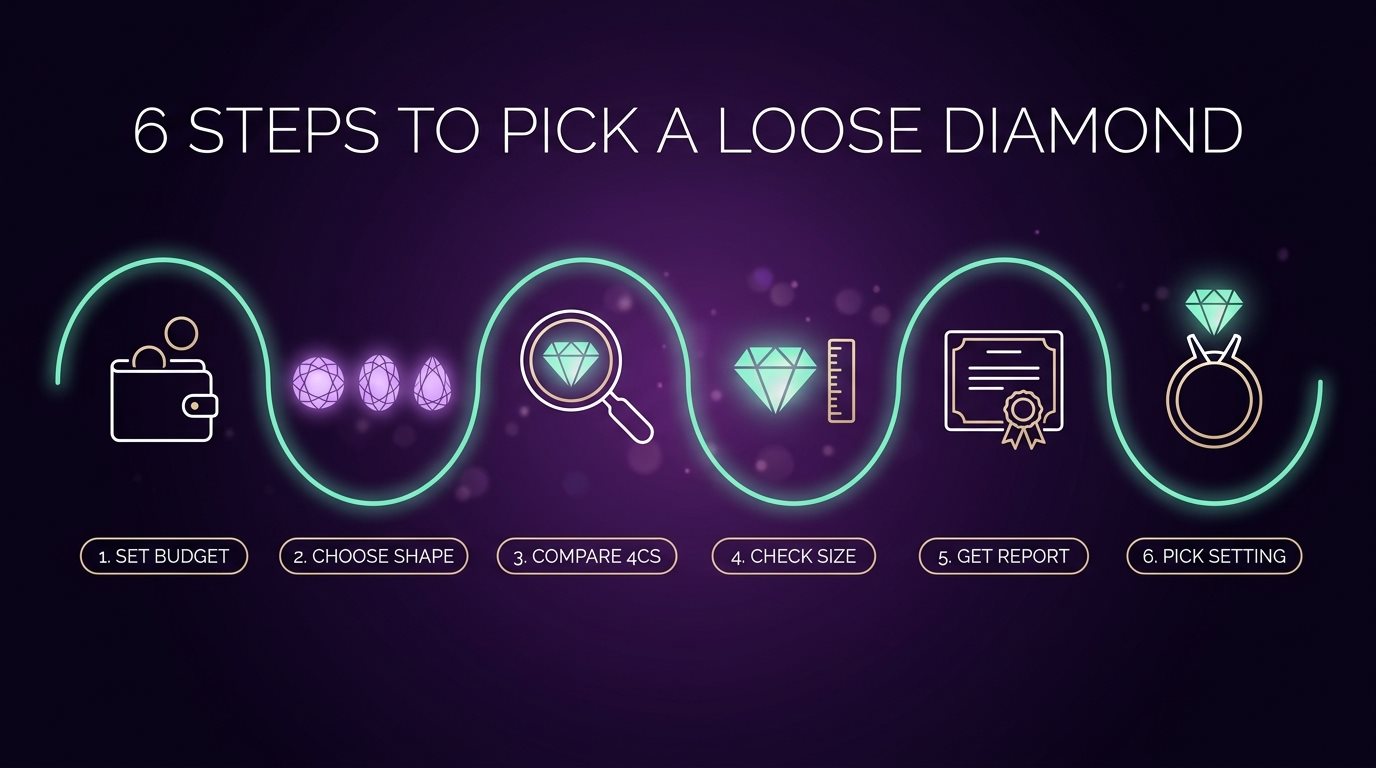
How to Choose the Right Loose Lab-Grown Diamond
Choosing a diamond doesn't have to be complicated. You don't need to know every technical detail to make a good choice. Start with your budget, decide what you like, and compare a few important features before making a decision.
1. Set Your Budget
Before looking at diamonds, decide how much you're comfortable spending. Remember to leave room for the setting and craftsmanship if you're planning to turn your diamond into a ring.
Having a budget in mind makes it easier to narrow down your options without getting distracted by stones that cost more than you want to spend.
2. Choose a Diamond Shape
Think about the look you prefer. Round diamonds offer a classic style, while oval, pear, emerald, and cushion shapes each have their own appeal.
If you're buying an engagement ring, don't choose a shape just because it's popular. Consider how it looks to you and whether it suits the design you have in mind.
3. Compare the 4Cs
The 4Cs (cut, color, clarity, and carat weight) help you understand a diamond's quality and compare your options.
Cut: Affects how well the diamond reflects light.
Color: Describes how colorless the diamond appears.
Clarity: Refers to tiny internal features or surface marks.
Carat: Measures the diamond's weight.
You don't necessarily need the highest grade in every category. The goal is to find a balance between appearance, quality, and price that works for you.
4. Check the Diamond's Measurements
Carat weight alone won't tell you how large a diamond looks from above, because its shape and measurements matter too.
Check the listed length, width, and depth when comparing stones, especially if you're choosing between different shapes. These details give you a better idea of the diamond's proportions and how it might look in a setting.
5. Ask for a Grading Report
Before buying, check whether the diamond comes with a grading report from a recognized gemological laboratory.
The report can provide details about the diamond's characteristics and confirm that it's identified as lab-grown. Make sure the report matches the stone you're purchasing rather than relying on the seller's description alone.
6. Think About the Ring Setting
Choosing the diamond is only half the decision if you're planning an engagement ring. The setting, band width, metal color, and height can all affect the finished look.
A ring try on tool can help you preview different styles on your hand before choosing a setting. You can compare designs and see which one you prefer, although the preview won't confirm the actual ring size or fit.
Once you've considered these details, you'll have a much clearer idea of which loose lab-grown diamond suits your budget and the design you want.
Final Word
Loose lab-grown diamonds give you the freedom to choose your stone first and decide how you want to use it. You might choose a diamond for an engagement ring, a wedding band, or another piece of jewelry. The best part is that you can explore the design options separately.
If you're planning to use your diamond in a ring, our Virtual Ring Try on tool can help you picture the finished look. Simply upload a photo of your hand, choose a ring style, and see how different designs look on you before settling on one.
FAQs
1. What is a loose lab-grown diamond?
A loose lab-grown diamond is a diamond grown in a laboratory that has been cut and polished but hasn't been set in jewelry. You can buy it on its own and choose a ring, pendant, or another design later.
2. Are loose lab-grown diamonds real diamonds?
Yes, lab-grown diamonds are real diamonds with essentially the same chemical composition and crystal structure as natural diamonds. The main difference is how they're formed.
3. Are loose lab-grown diamonds cheaper than natural diamonds?
Generally, yes. Lab-grown diamonds usually cost less than natural diamonds with similar characteristics. The exact price depends on factors such as cut, color, clarity, carat weight, and the seller.
4. Can I use a loose lab-grown diamond in any ring setting?
Not every setting will fit every diamond. The setting needs to match the stone's shape and measurements and hold it securely. Check with your jeweler before buying to make sure they're compatible.
5. Do loose lab-grown diamonds come with grading reports?
Some do, but it depends on the diamond, seller, and grading service. Before buying, ask for the available report and check that it matches the diamond you're considering.
Find Your Perfect Ring in Seconds
Stop guessing and start seeing. Our AI-powered virtual ring checker analyzes your preferences to reveal the perfect diamond for you. It's fast, fun, and finds your fit.
Try Our AI Checker Now