
An engagement ring is a big purchase, and it's a decision that will stay with you as a special memory for years to come. That's why every detail matters, from choosing the right diamond and metal to finding engagement ring settings that suit your style.
A round solitaire engagement ring is a great choice if you prefer a simple, classic design with one diamond at the center. But how do you choose the right one? The diamond's cut affects its sparkle, the setting affects how it looks and holds the diamond in place, and the metal gives the ring its overall appearance.
Let's look at what makes round solitaire engagement rings special, what to consider before buying one, and how to find a ring that suits your style and budget.
What Is a Round Solitaire Engagement Ring?
A round solitaire engagement ring features one round diamond set on a metal band. With no extra stones around the center diamond, the design keeps the focus on the stone itself. But the diamond's size, the setting, and the band style can all change how the ring looks.
Most round solitaire rings feature a round brilliant diamond, which is cut to reflect light and create sparkle. The setting also affects its appearance. A prong setting holds the diamond with small metal claws, leaving more of the stone exposed, while a bezel setting surrounds its edge with metal for a more defined look. You can explore our guide to engagement ring settings to compare different styles and find one that suits your taste.
The band makes a difference, too. A simple yellow gold band gives the ring a warm, classic look, while white gold or platinum offers a cooler finish. You can also choose a thinner or thicker band depending on the look you prefer.
These details may seem small, but they can change the overall appearance of a round solitaire engagement ring. Comparing different diamond sizes, settings, and band styles can help you find a ring that feels right for you.
Why Round Diamonds Never Go Out of Style
There’s a reason round diamonds have remained a favorite for engagement rings. Their cut is designed to reflect light from different angles, giving them the bright sparkle many people look for in a diamond. Even with a simple band and no extra stones, a round diamond can make the ring feel special.
Another reason people choose this shape is how easily it works with different styles. You can set a round diamond in a plain yellow gold band for a classic look, pair it with white gold or platinum for a cooler finish, or choose a more detailed setting if you prefer something with a vintage feel. The center stone stays the same, but the overall look can change quite a bit.
You also have plenty of room to choose a design that suits your taste. A smaller diamond with a thin band can look subtle and delicate, while a larger stone or a wider band creates a bolder appearance. A round solitaire doesn't need extra diamonds or decorative details to look complete.
Of course, round diamonds have a few things to consider before you buy. They often cost more than some other diamond shapes of similar carat weight and quality. If you're working with a set budget, it may be worth comparing round diamonds with oval, pear, or other shapes to see how their size and appearance differ.
In the end, a round diamond is worth considering if you love its sparkle and classic shape. But don't choose it just because it's popular. Take time to compare different shapes and ring styles, then choose the one that feels right for you.
How to Choose the Right Solitaire Ring Design
Even though a round solitaire engagement ring has just one center diamond, small design choices can change its overall look. The prongs, band width, and setting height are all worth considering before you buy.
Four Prongs or Six Prongs?
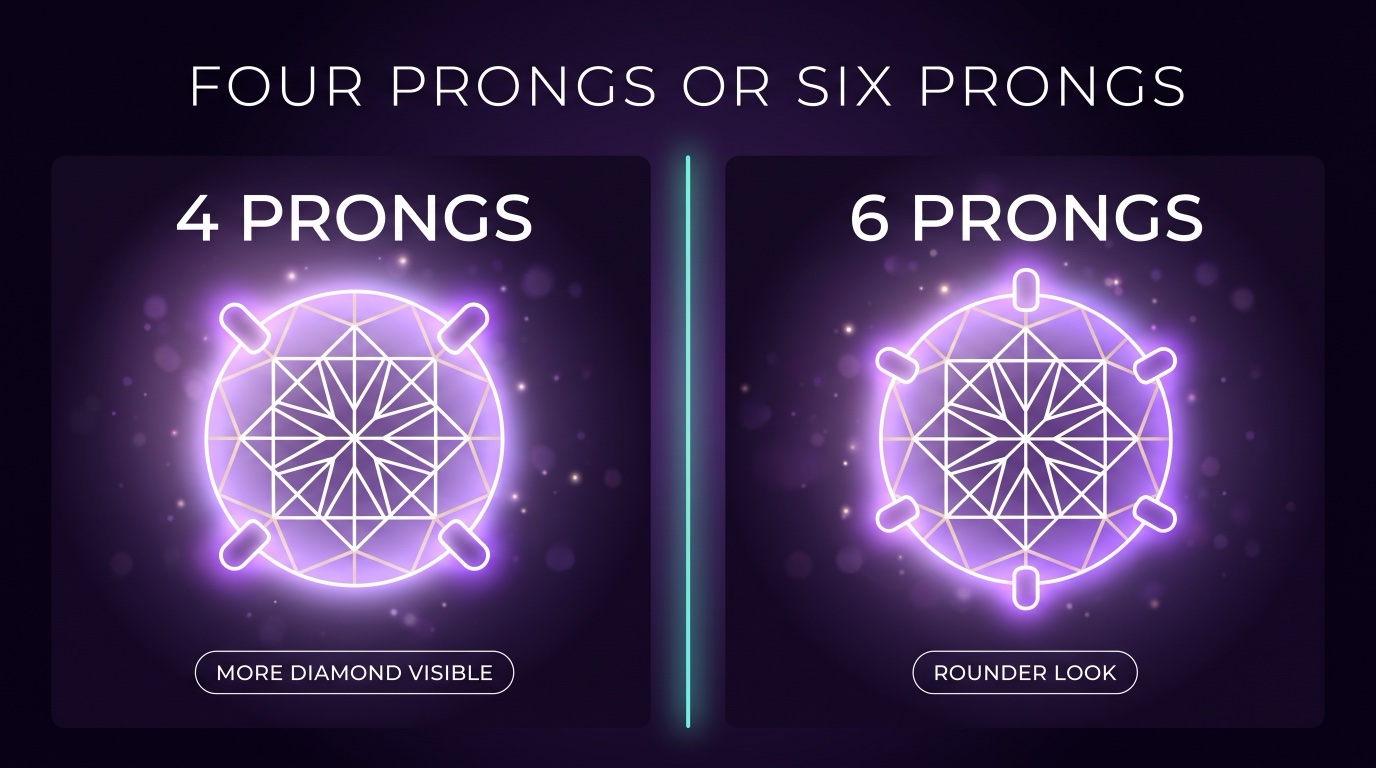
Prongs are the small metal claws that hold the diamond in place. Four-prong settings leave more of the diamond visible, giving the ring a clean, open look. Six-prong settings frame the diamond more fully and can emphasize its round shape.
Both can hold a diamond securely when properly made. The right choice depends on your diamond and the look you prefer. You can read GIA's guide to four-prong and six-prong settings to learn more.
Thin Band or Thick Band?
A thin band gives a round solitaire a delicate look and draws attention to the center diamond. A thicker band creates a bolder appearance and makes the ring look more substantial.
Think about durability as well as appearance. Very thin bands may bend more easily, depending on their construction and the metal used. If you plan to wear your ring every day, ask your jeweler which band width would be suitable for regular wear.
High-Set or Low-Set?
A high-set ring holds the diamond farther above the band, making it more noticeable from the side. However, the raised stone may catch on clothing or hair.
A low-set ring keeps the diamond closer to your finger, which can make it more practical for everyday wear. Think about your daily routine and which style feels more comfortable to you.
If you plan to wear a wedding band alongside your engagement ring, ask your jeweler how the two will fit together. Some designs sit neatly side by side, while others leave a small gap.
Ultimately, choose a round solitaire engagement ring that suits your taste, feels comfortable, and works for your everyday life.
Which Diamond Is Right for Your Solitaire Ring?
When choosing a diamond for your round solitaire engagement ring, you’ll need to decide between a natural and a lab-grown diamond. Both can look equally beautiful and have essentially the same physical properties, so neither is automatically more sparkly or longer-lasting than the other.
If you're unsure about the differences, read our guide to lab-grown diamonds, where we compare natural and lab-grown diamonds, including their origins, appearance, cost, and resale value.
So, which should you choose? If you want to spend less or get a larger diamond for your budget, a lab-grown diamond may be the better option. If you value a diamond formed naturally in the Earth, you may prefer a natural one.
Both can last a lifetime with proper care. Focus on the diamond’s cut, overall quality, and the setting’s durability to choose a round solitaire engagement ring you’ll love wearing for years.
How Much Does a Round Solitaire Engagement Ring Cost?
The price of a round solitaire engagement ring depends on the diamond's carat weight, cut, color, clarity, and the metal used for the setting. Lab-grown diamonds generally cost less than natural diamonds, so your budget can go further with one.
Here are three examples from jewelry retailers' official websites:
Around $690 and up: Brilliant Earth offers round engagement ring designs at different prices. The center diamond may cost extra.
Around $795 to $1,295: Robbins Brothers lists natural diamond solitaire rings in this range at regular price, including smaller diamonds of around 3/8 to 1/2 carat.
Around $1,775 for the setting: Gabriel & Co lists the Kamera 14K white gold round solitaire setting at this price. The center diamond is sold separately.
These prices are examples from online listings checked in November 2026, not guaranteed future prices. Before comparing rings, check whether the price includes the center diamond and compare the diamond's specifications and setting.
What to Check Before Buying a Round Solitaire Engagement Ring
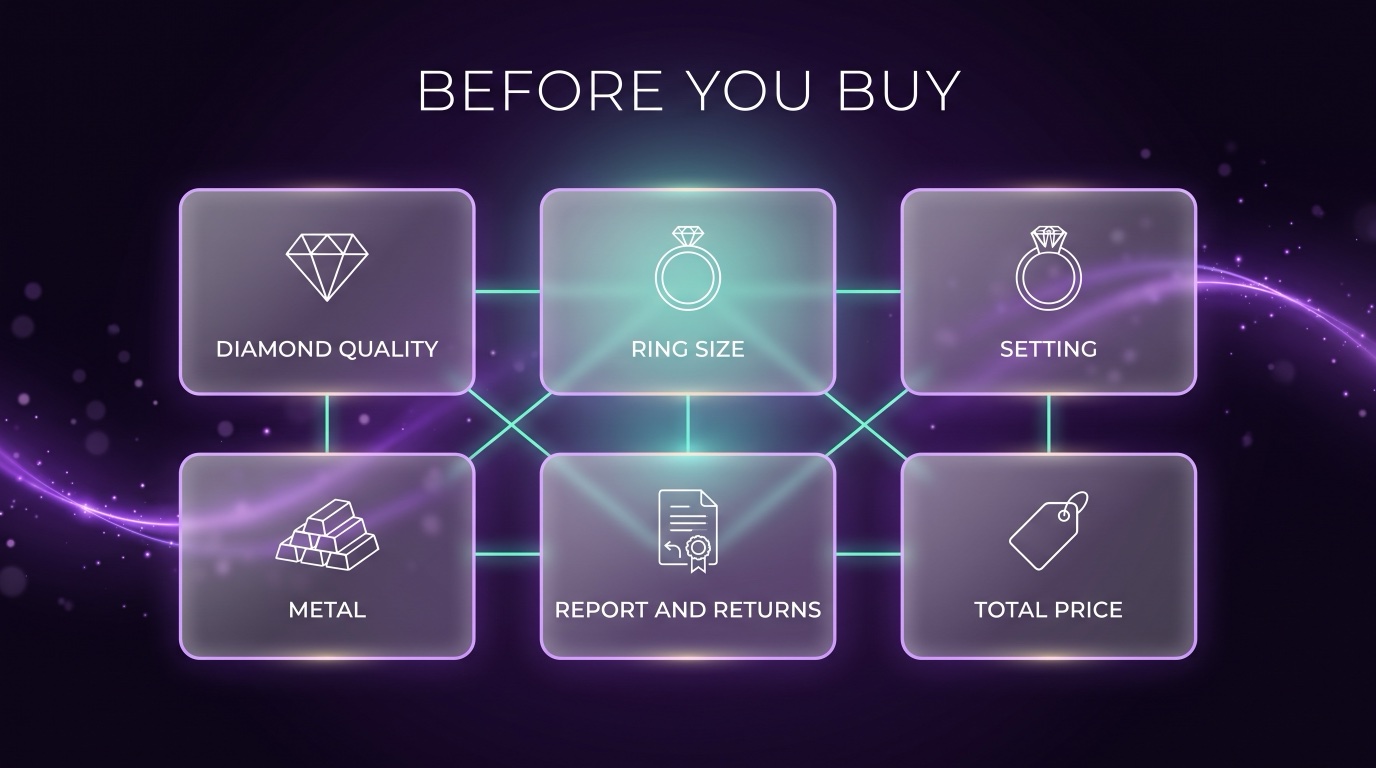
Before buying a round solitaire engagement ring, take a closer look at the details, especially if you're choosing a preset engagement ring. Since the diamond and setting are already paired together, check the diamond's quality, the ring's metal, and how well the design fits your style and budget.
Diamond quality: Look at the cut, color, clarity, and carat weight. These help determine how the diamond looks and how much it costs.
Ring size: Choose a size that feels comfortable for everyday wear. If you're unsure, have your finger measured by a jeweler.
Setting: Check how securely the diamond is held in place. A well-made setting helps protect the stone during daily wear.
Metal: Decide between yellow gold, white gold, and platinum based on your style, budget, and maintenance preferences.
Certification and return policy: Check whether the diamond comes with a grading report and whether the retailer allows returns, exchanges, or resizing.
Finally, check the total price before making a decision. Make sure it includes both the center diamond and the setting, so you know exactly what you're paying for.
Final Word
So, now that you know what to look for in a round solitaire engagement ring, it's time to find the one that catches your eye. Compare different diamond sizes, settings, and prices, and take your time deciding what works best for you.
Still not sure which ring will look best on your hand? Try our virtual ring try-on tool. Upload your hand photo, explore different styles, and see which round solitaire ring you like best before making your purchase. A preview shows how a ring looks, but it can't tell you its comfort, weight, or exact size, so get properly sized by a jeweler before you buy.
FAQs
Is a round solitaire engagement ring a good choice for a first-time buyer?
A round solitaire is a good starting point if you prefer a classic design with one central diamond. You can choose from different diamond sizes, metals, and settings to find a ring that suits your taste and budget.
What diamond size should you choose?
Start with your budget and the look you prefer. A larger diamond isn't always the better choice, so compare different carat weights and measurements to see what looks balanced on your finger.
Which setting holds a round diamond securely?
Four-prong and six-prong settings are both popular choices. Six prongs provide additional points of contact, but the setting's overall quality matters too. Regular checks by a jeweler help keep the diamond secure.
Are lab-grown diamonds worth considering?
Lab-grown diamonds are worth comparing if you want to spend less while choosing a diamond with similar physical and optical properties to a natural diamond. Compare the price, grading report, and specifications before deciding.
Can a round solitaire fit flush with a wedding band?
The fit depends on the engagement ring's setting and the wedding band's shape. Some rings allow the band to sit closely beside them, while others leave a small gap. If you prefer a snug fit, try the two rings together before buying.
Find Your Perfect Ring in Seconds
Stop guessing and start seeing. Our AI-powered virtual ring checker analyzes your preferences to reveal the perfect diamond for you. It's fast, fun, and finds your fit.
Try Our AI Checker Now